Every emotion leaves a physiological imprint.
A difficult conversation can consume more energy than several hours of work. A meaningful meeting, a sense of appreciation or a clear sense of purpose can sometimes leave us feeling more energized even after considerable effort.
The difference has a biological dimension. Emotions are associated with changes in heart rate, breathing, muscle tension, hormonal activity, the autonomic nervous system and brain processes involved in attention and decision making.
HeartMath uses a simple self observation model known as the Depletion to Renewal Grid. It organizes emotional states according to two dimensions: the level of activation in the body and whether the experience tends to consume or renew our available energy.
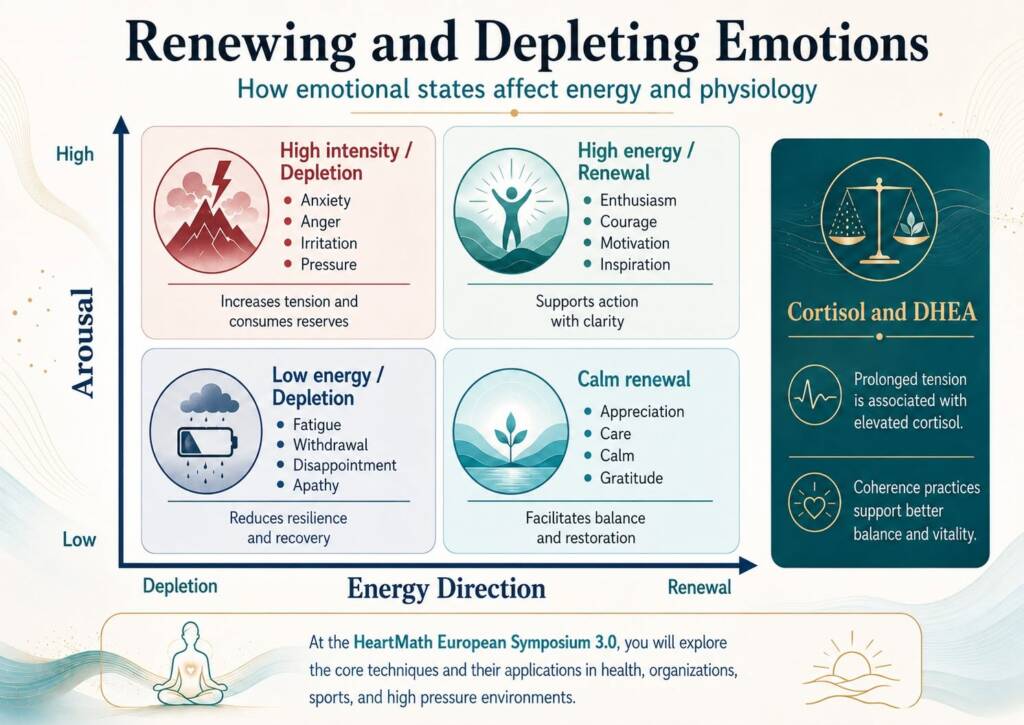
1. High Activation and Depletion
Stress, anger, frustration, pressure and persistent worry commonly belong to this area.
The body prepares for immediate action. Heart rate may increase, breathing can become faster and shallower, muscles tighten and attention becomes increasingly focused on the perceived problem.
This response can be extremely useful when rapid action is required. The physiological cost increases when this state continues long after the immediate demand has passed or when daily life becomes a continuous sequence of internal alarms.
Under prolonged stress, thinking can become less flexible and attention can become increasingly focused on potential threats. Chronic stress has also been associated with difficulties in working memory, cognitive flexibility and emotional regulation.
2. Low Activation and Depletion
Fatigue, disappointment, withdrawal, resignation and apathy have a very different quality.
The external intensity may appear lower, yet the available energy of the organism can also be significantly reduced.
After long periods of sustained pressure, a person may gradually find it difficult to mobilize. Thinking becomes slower, decisions require more effort and even simple responsibilities can feel demanding.
This state frequently appears alongside prolonged stress, insufficient sleep and inadequate recovery.
Recognizing the difference between genuine calm and exhaustion matters. A depleted system often needs restoration, reduced demands and better recovery before it can return to effective functioning.
3. High Activation and Renewal
Excitement, courage, inspiration, curiosity and creative engagement also involve increased physiological activation.
The heart may beat faster. Attention becomes intense. The body prepares for action.
The experience, however, is accompanied by purpose, engagement and a sense that the challenge is meaningful or manageable.
The same demanding presentation, for example, can be experienced as a threat or as a stimulating creative challenge. The external situation may remain very similar while the psychological and physiological experience changes considerably.
Even renewing forms of activation require recovery. Sustained excitement combined with insufficient sleep and rest can eventually become physically demanding. Renewal depends on the relationship between mobilization and restoration.
4. Low Activation and Renewal
Appreciation, care, gratitude, calmness and inner satisfaction belong to this fourth area.
During these states, breathing often becomes slower, muscular tension can decrease and attention may broaden. This can support clearer thinking, better listening and a more measured response to what is happening around us.
HeartMath connects these emotional states with the concept of physiological coherence, describing a more organized heart rhythm pattern that can occur during slow rhythmic breathing combined with intentionally generated renewing emotions such as appreciation.
Heart rate variability, commonly known as HRV, reflects the natural variation in time between consecutive heartbeats. It provides information about the regulation of the heart by the autonomic nervous system and is influenced by factors including breathing, age, physical condition, sleep and posture. Research into HRV biofeedback has reported positive effects across several psychological and physiological outcomes, although results vary across studies and populations.
From Awareness to Regulation
A useful practice is simply to observe what is happening during the day.
What emotion is dominant right now?
How activated does my body feel?
Is this state consuming energy or renewing it?
How is it influencing my breathing, thinking, body and communication?
The ability to recognize our internal state creates the possibility of adjusting it more consciously.
This relationship between physiology, emotional self regulation, resilience and performance under pressure will be explored at HeartMath European Symposium 3.0, taking place from 30 October to 1 November 2026 in Athens, under the theme Heart in Leadership. Participants will explore HeartMath techniques for coherence, emotional regulation, resilience, communication and effective functioning under demanding conditions. Book your ticket here